
Just Earth News | @justearthnews | 24 Nov 2026, 01:32 am Print
 Iran
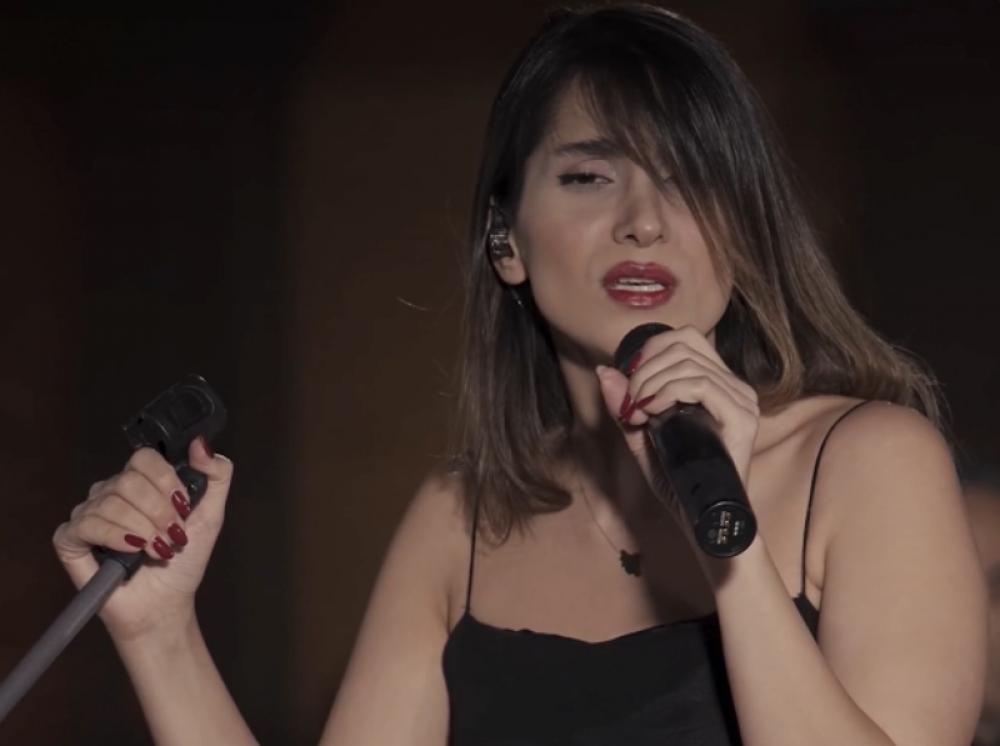
Iran flogs singer Parastoo Ahmadi 74 times over performance without 'mandatory' hijab. Photo: Screen grab from YouTube
Iranian singer Parastoo Ahmadi and four members of her musical team have each received 74 lashes after authorities enforced a sentence linked to a performance she released online without wearing the mandatory hijab.
A lawyer representing the defendants told the BBC on Monday that authorities carried out the punishment at the Criminal Sentence Enforcement Office in the Iranian city of Qom.
Ahmadi, three musicians and a producer were flogged after an appeals court upheld their convictions for publishing material deemed to have offended public decency.
Their lawyers said the defendants were also barred from artistic and musical activities and prohibited from travelling abroad for two years.
The case stems from a video published on YouTube in December 2024, showing Ahmadi performing alongside male musicians without a headscarf.
Iran’s Islamic regime has rewarded 29-year-old Parastoo Ahmadi for her haunting voice with 74 lashes. Reason: No hijab. https://t.co/IHu3ytpTgO
— Abhijit Majumder (@abhijitmajumder) November 23, 2026
Court upholds sentence over online performance
The 29-year-old singer appeared in the video wearing a sleeveless dress while performing with a group of male musicians.
The recording, described as a concert, was released online in December 2024.
Iranian authorities subsequently brought charges against Ahmadi and eight other individuals over the performance and its publication.
A criminal court in Qom convicted the defendants in June on charges of “offending public decency” through the production and publication of what the authorities described as “obscene and indecent material”.
The defendants denied the allegations.
The court imposed 74 lashes and two-year restrictions on audiovisual activities and international travel.
An appeals court in Qom rejected their challenge at the end of September and upheld the punishment, according to the defence team.
Pro-reform news website Etemad quoted lawyer Mostafa Nili as identifying the four men flogged alongside Ahmadi as Soheil Faghih-Nasiri, Amin Taheri, Amirali Pirnia and Mohsen Lashkari.
Lawyers fail to stop flogging
One of the lawyers representing the defendants told the BBC that the punishment was carried out at the third branch of the Criminal Sentence Enforcement Office in Qom.
The defence team had attempted to overturn the verdict or secure a reduction or suspension of the sentence, but those efforts were unsuccessful.
“We did everything in our power to have the verdict overturned, or at least to secure a reduction in the sentence or a suspension, but it didn't work out,” the lawyer said.
He added that the legal team had also sought to postpone the enforcement of the punishment.
“The other lawyers and I even tried to get the enforcement of the sentence postponed, but the enforcement branch insisted on carrying it out immediately,” he said.
The Norway-based human rights organisation Hengaw had earlier reported that the case followed Ahmadi's performance without a hijab alongside male musicians in Qom.
Rights groups condemn punishment
The flogging has drawn criticism from human rights advocates and Iranian artists, who have described the punishment as cruel and degrading.
Bahar Ghandehari, director of advocacy at the US-based Centre for Human Rights in Iran, condemned the sentence and said it demonstrated the authorities' efforts to restrict women's freedoms.
“Parastoo Ahmadi's flogging for singing and dressing as she chooses is a flagrant violation of her fundamental rights and a chilling demonstration of the Iranian authorities' determination to suppress women's freedoms and to violently punish anyone who dares to challenge their discriminatory laws and policies,” Ghandehari said.
Western governments and human rights organisations have repeatedly criticised judicial flogging, describing it as torture and a violation of international law.
Iran has rejected allegations concerning its human rights record and has called on Western countries to address their own human rights issues.
Hijab rules remain a source of tension
Iranian law, based on the country's interpretation of Islamic Sharia, requires women and girls above the age of puberty to cover their hair and wear loose-fitting clothing in public.
The mandatory dress code became a major focus of nationwide protests in 2022 following the death in custody of Mahsa Amini, a 22-year-old Kurdish Iranian woman detained by morality police in Tehran over an alleged violation of hijab rules.
Demonstrators took to the streets across the country, with some women removing or burning their headscarves in protest against the authorities.
Security forces responded with a crackdown in which hundreds of people were killed, according to human rights groups.
Since then, increasing numbers of women have appeared in public without headscarves, openly challenging the dress code.
Authorities have periodically responded with arrests, warnings and the closure of businesses.
Wider crackdown draws further scrutiny
The punishment of Ahmadi and her colleagues comes amid broader concerns over the treatment of protesters and political opponents in Iran.
A further wave of anti-government demonstrations erupted in January following the country's economic crisis.
Security forces launched a major crackdown, with thousands reportedly killed and tens of thousands arrested.
Following the outbreak of the war involving Iran, the United States and Israel in late February, authorities also intensified the use of capital punishment against people accused of participating in protests or collaborating with foreign organisations, according to human rights groups.
The Norway-based organisation Iran Human Rights reported that at least 39 men convicted over the January protests and two people convicted over the 2022 unrest had been executed.
It also reported the executions of 16 people allegedly affiliated with banned opposition groups and 17 others convicted of espionage or collaboration with foreign states.
The organisation further said that 121 people detained during the January protests, including six women and five juvenile offenders, had received death sentences and faced an imminent risk of execution.
- Trump shares AI meme image of Jensen Huang recreating his assassination attempt moment. Here's the twist
- Texas phone store employee tried to send customer’s nude photos to himself, now in ICE custody
- Targeted Attack in Canada? Couple shot dead in broad daylight outside Walmart
- Cyberattack rocks US Agriculture Department amid growing fears over sensitive data
- Bangladesh tensions rise: 50 houses, Awami League properties set ablaze in Narail ahead of Hasina's return