
Just Earth News | @justearthnews | 31 Mar 2026, 07:42 am Print
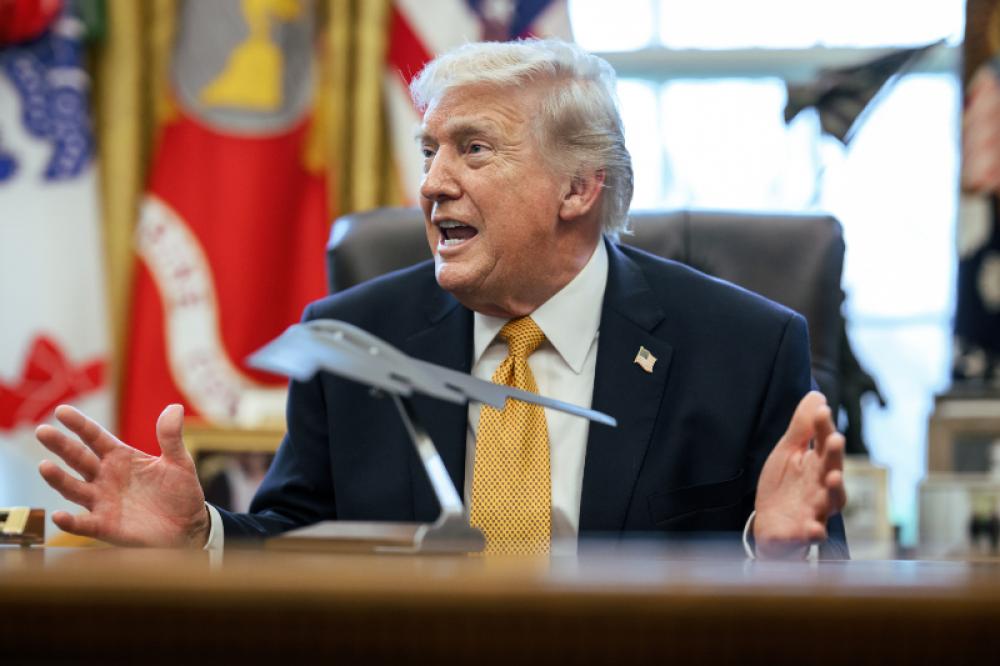 Donald Trump
 US President Donald Trump. Photo: Wikimedia Commons/Flickr/The White House/Molly Riley
As the geopolitical crisis in West Asia intensifies, the global energy landscape is being reshaped by a tightening chokehold over critical supply routes.
More than a month into the conflict involving Iran, disruptions in oil transit have triggered fuel shortages and market volatility across multiple regions.
At the centre of the disruption lies the Strait of Hormuz, a narrow maritime corridor that carries nearly 20 percent of the world’s oil.
Iran’s blockade of this passage has significantly curtailed shipping activity, forcing nations dependent on imported energy to reassess their supply strategies.
Against this backdrop, US President Donald Trump has issued a direct message to allied nations grappling with shortages, signalling a shift in Washington’s stance on burden-sharing in the conflict.
Trump’s message to allies on oil access
In remarks posted on Truth Social, Trump outlined two options for countries affected by the fuel crunch: purchase energy supplies from the United States or secure access independently through the Strait of Hormuz.
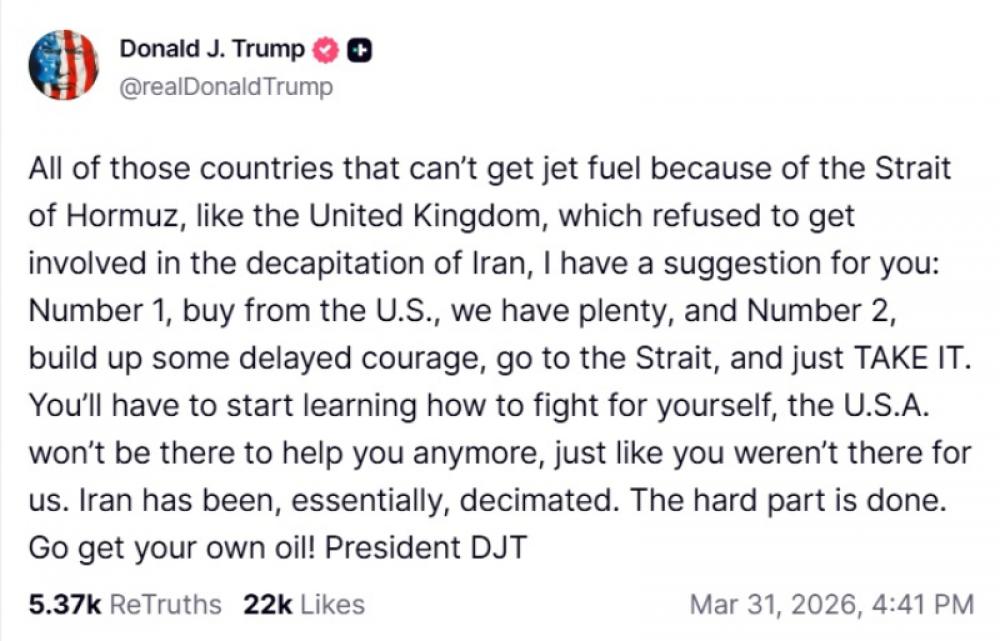 Trump tells allies to secure oil themselves as Hormuz blockade disrupts global energy flows.
The comments specifically referenced nations such as the United Kingdom, which have faced constraints in fuel availability following their decision not to participate in military operations against Iran.
Trump criticised allies for declining to join the campaign, stating that they would need to assume greater responsibility for their own energy security.
He indicated that the United States would not consistently provide assistance, emphasising that countries should develop the capacity to manage such crises independently.
Hormuz blockade disrupts global supply chains
Iran’s decision to restrict access to the Strait shortly after the launch of US-led strikes on February 28 has had immediate global repercussions.
The waterway connects the Persian Gulf to the Gulf of Oman and serves as a critical conduit for international oil shipments.
The blockade has slowed or halted the movement of hundreds of vessels, including tankers, container ships and bulk carriers.
The disruption has driven crude oil prices sharply higher, crossing the $100 per barrel mark from earlier levels of around $75.
The resulting supply constraints have affected multiple sectors, increasing costs for transport, manufacturing and essential goods worldwide.
Limited progress in reopening the Strait
Despite repeated warnings from Washington, efforts to restore free navigation through Hormuz have yet to succeed.
The United States has urged allied nations to deploy naval assets to secure the passage, but responses have remained limited.
Trump’s recent remarks suggest a recalibration of expectations, with a greater emphasis on self-reliance among partner nations.
The shift reflects the challenges associated with reopening a heavily contested maritime corridor during an active conflict.
Escalation in rhetoric and military posturing
The US President has continued to warn of further military action if Iran does not agree to reopen the Strait and engage in negotiations.
Potential targets mentioned include key energy infrastructure, such as Kharg Island, a major hub for Iran’s oil exports.
At the same time, reports indicate that Washington has explored diplomatic avenues, including setting deadlines for reopening Hormuz.
However, differing positions between the two sides have slowed progress.
Iran’s position and strategic measures
Iran has rejected US proposals, describing them as unacceptable, and has maintained its military posture in the region.
Iranian forces have continued to launch missile and drone attacks targeting US interests and allied locations across the Gulf.
Tehran has also explored additional measures to consolidate control over the Strait, including proposals to impose transit fees on vessels and stricter restrictions on ships linked to adversarial countries.
Iranian officials have warned of further escalation, including the possibility of mining key maritime routes and expanding operations if foreign troops enter its territory.
- US to launch limited edition passports with Trump’s face and signature for 250th anniversary
- UAE leaves OPEC, OPEC+ as energy crisis deepens across global oil markets
- Buddhist monks on Thailand trip arrested with 110 kg of cannabis at Sri Lanka Airport
- Iran issues ‘quadruple strike’ warning to Gulf nations after Trump threatens to target Tehran's energy network
- Iran sets 3-stage formula for US talks: Peace first, Strait of Hormuz next, nuclear issue last