
Just Earth News | @justearthnews | 17 Mar 2026, 09:41 pm Print
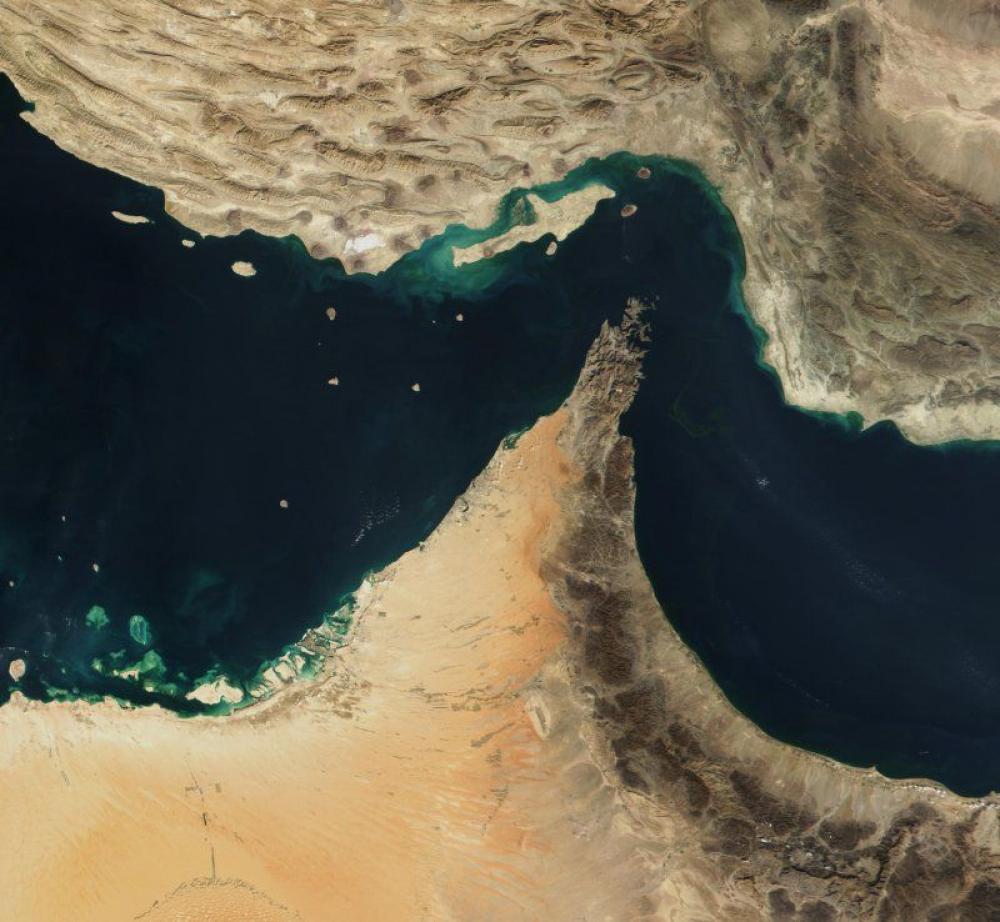 Strait of Hormuz
 Strait of Hormuz. Photo: Wikimedia Commons
The United States on Tuesday confirmed that it carried out strikes on Iranian missile sites near the strategically vital Strait of Hormuz, using some of the most powerful bombs in its arsenal.
“Hours ago, U.S. forces successfully employed multiple 5,000-pound deep penetrator munitions on hardened Iranian missile sites along Iran’s coastline near the Strait of Hormuz,” U.S. Central Command said in a post on X.
Hours ago, U.S. forces successfully employed multiple 5,000-pound deep penetrator munitions on hardened Iranian missile sites along Iran’s coastline near the Strait of Hormuz. The Iranian anti-ship cruise missiles in these sites posed a risk to international shipping in the… pic.twitter.com/hgCSFH0cqO
— U.S. Central Command (@CENTCOM) March 17, 2026
According to the command, the targeted sites housed Iranian anti-ship cruise missiles that posed a significant threat to international shipping passing through the strait — a route that handles roughly one-fifth of the world’s oil supply.
The strikes came as Iran had reportedly moved to block the Strait of Hormuz, a step widely seen as retaliation against ongoing military actions by the United States and Israel.
Amid the escalating tensions, Iran’s army chief, Amir Hatami, warned of a “decisive” response following the killing of senior security official Ali Larijani in an Israeli airstrike.
“At the appropriate time and place, a decisive, deterrent, and regretful response will be given to the criminal America and the bloodthirsty Zionist regime,” Hatami said in a statement cited by BBC, adding that the deaths of Larijani and other “martyrs will be avenged.”
Earlier, the Israel Defense Forces (IDF) claimed responsibility for eliminating Larijani, who served as Secretary of Iran’s Supreme National Security Council and was considered a key figure in the country’s leadership. The IDF described him as “one of the most veteran and senior figures” in the Iranian regime and a close associate of Ali Khamenei.
The Israeli military also alleged that Larijani played a direct role in suppressing recent anti-government protests in Iran.
?Ali Larijani, Secretary of Iran’s Supreme National Security Council and the regime’s effective leader, has been eliminated.
— Israel Defense Forces (@IDF) March 17, 2026
Throughout the years, Larijani was considered one of the most veteran and senior figures within the Iranian regime leadership, and was a close associate… pic.twitter.com/kBIgSSGBm0
Larijani, widely regarded as a top decision-maker, had reportedly assumed a more prominent leadership role following the reported death of Khamenei on February 28 in strikes attributed to U.S. and Israeli forces in Tehran. He was last seen publicly at a rally in Tehran on March 13.
In a separate claim, the IDF said that Gholamreza Soleimani, head of Iran’s Basij paramilitary force, was also killed in an overnight strike.
These developments come amid rapidly escalating hostilities since the outbreak of conflict on February 28. U.S. and Israeli sources claim that multiple senior Iranian leaders have been killed in recent operations.
In response, Iran has reportedly launched retaliatory strikes targeting several cities across the Gulf region, raising fears of a wider regional conflict.
- Deadly shooting rocks US: 9 dead in Erie, two children among victims
- Indian-origin jurist Navi Pillay wins Nobel Peace Prize for championing international law
- India condemns Houthi attacks on Saudi airports, calls targeting of civilian infrastructure unacceptable
- Nobel Chemistry 2026: Henri Kagan, Kenso Soai wins Chemistry honour
- US: Fort Hood shooter Nidal Hasan to be executed by firing squad on Trump’s approval
-1791127926.jpg "Image of the day: October 4, 2026")