
Just Earth News | @justearthnews | 26 Jun 2026, 01:47 pm Print
 Ebola
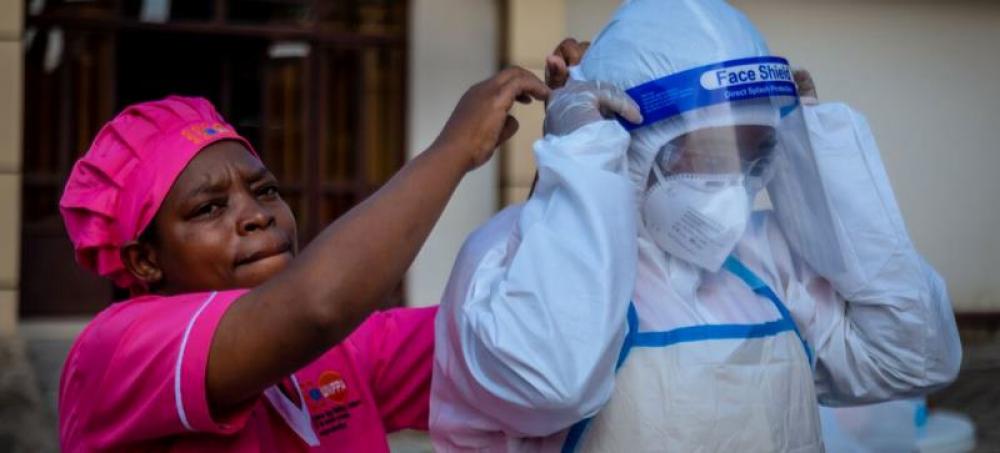
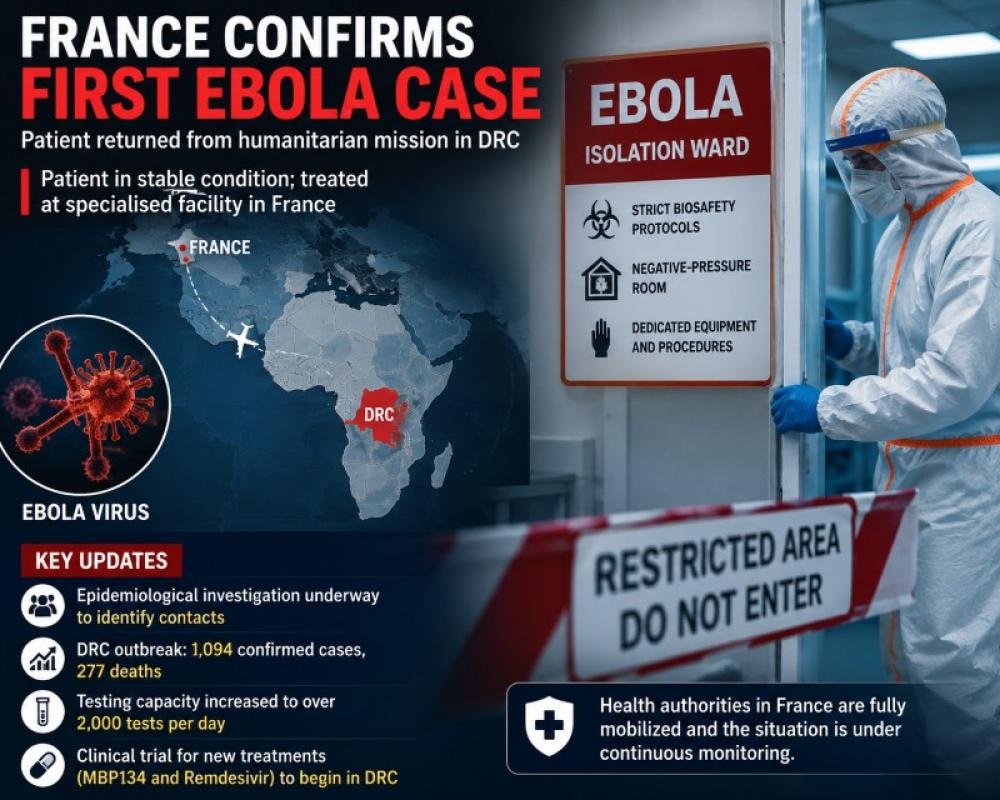
Ebola France confirms first Ebola case. Photo: ChatGPT Recreated
The French government on Friday confirmed the country's first diagnosed case of Ebola, involving a patient who recently returned from a humanitarian mission in the Democratic Republic of the Congo (DRC).
In an official statement, the government said the patient was immediately admitted to a specialised referral facility and is currently in stable condition.
"France possesses specialised capabilities for managing highly transmissible infectious diseases. The patient is being treated at a designated referral health facility, adhering to strict biosafety protocols, including a negative-pressure room and dedicated equipment and procedures. Health authorities are fully mobilised, and the situation is being continuously monitored," the statement said.
The government added that all precautionary measures, including immediate isolation and secure hospital transfer upon the patient's arrival in France, were implemented to eliminate any risk of transmission.
Health authorities have launched a comprehensive epidemiological investigation to identify and monitor individuals who may have come into contact with the patient.
The development comes as the Ebola outbreak in the Democratic Republic of the Congo continues to spread rapidly despite major improvements in the response effort.
Speaking at a media briefing in Geneva on Wednesday, World Health Organization (WHO) Director-General Tedros Adhanom Ghebreyesus said the outbreak remains a serious public health challenge more than a month after it was first reported.
"It is encouraging to see that since the outbreak was first reported five weeks ago, the response has scaled up significantly," Tedros said.
According to the WHO, treatment capacity has expanded from fewer than 10 beds to more than 500 across 19 health centres in just over a month. Laboratory testing capacity has also increased dramatically—from around 30 tests per day in Kinshasa to more than 2,000 daily tests across nine laboratories in three provinces.
Tedros said public awareness has also improved, with more communities seeking information and support to protect themselves from the virus.
"More communities are becoming aware of the risks of Ebola and asking for the tools and support to protect themselves," he said.
More than 100 patients have recovered so far, underscoring the importance of early diagnosis and supportive treatment.
However, the outbreak continues to grow. The WHO said the DRC has reported 1,094 confirmed Ebola cases and 277 deaths, while neighbouring Uganda has recorded 20 confirmed cases, including two deaths.
The WHO and its partners are preparing to launch a clinical trial next week in the DRC to evaluate whether two antiviral treatments—MBP134 and remdesivir—can reduce deaths caused by Bundibugyo virus disease.
"We could save many more lives with therapeutics," Tedros said.
The WHO said affected communities are being actively consulted about the clinical trial, and plans are in place to ensure access to the treatments should they prove effective.
- Small diet changes, big heart benefits: 20-year study delivers good news for you
- Want to stay younger? Visiting the cinema or a museum may be the secret
- Think your lungs heal after quitting? New study challenges a common belief
- Your Apple Health data can now talk to ChatGPT—OpenAI launches new health feature
- Are you a night owl? Study warns of higher risk of obesity and metabolic problems
-1784726564.jpg "Image of the day: July 22, 2026")