
Just Earth News | @justearthnews | 25 Mar 2026, 05:34 am Print
 Climate Change
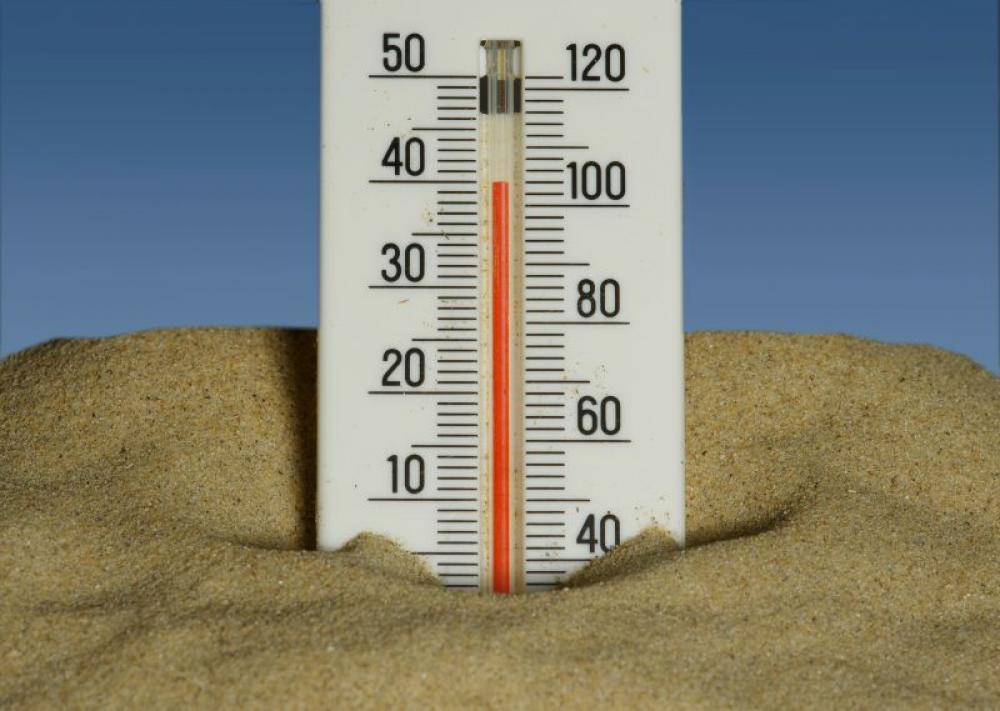
 Study predicts heat could kill millions. Photo: Unsplash
A new report on the impact of rising temperatures on mortality underscores the need for targeted investments to help people and communities save lives.
The study is the first in a series to identify where and what climate adaptation investments will be most beneficial.
Record-breaking heat waves grab the headlines each summer because they cause tens of thousands of deaths.
A new report from the Climate Impact Lab finds that climate change is projected to increase these premature deaths and that more than 90 percent of them are slated to occur in low- and middle-income countries.
The report underscores that targeted adaptation investments can substantially save lives, as temperature-related mortality will depend both on the direct impacts of a warming climate and on the investments that people and governments make to protect human health.
“This report uncovers one of climate change’s cruelest ironies—it is projected to kill millions of people in the countries that have generally done the least to cause it. Further, their relatively low income levels mean that they are not as well positioned as people in rich countries to confront the new and unfolding risks from climate change,” says Michael Greenstone, a co-founder of the Climate Impact Lab and the director of the Institute for Climate and Sustainable Growth and Energy Policy Institute at the University of Chicago. “In this report, we’ve identified the regions around the world where climate adaptation investments can save the most lives.”
The report is based on the Climate Impact Lab’s landmark projections of temperature-related mortality. These are the first projections of rising temperature’s impacts on mortality, based on highly-localized data from around the world.
Importantly, they highlight that the extent to which adaptation reduces temperature-related mortality hinges on the choices that governments and people make, including investments in air conditioning, cooling centers and other adaptive measures.
The findings from the new report underscore the inequality of climate change.
The issue is not only that warmer regions are set to experience higher mortality than cooler ones, but also that the greatest impacts are projected to fall on regions that are both hotter and poorer, as they have fewer resources for adaptation.
For example, the country of Burkina Faso in West Africa is projected to experience double the number of deaths from heat than the wealthier country of Kuwait in the Middle East, despite their similar climates. Overall, ten times more people are projected to die from the heat in poor countries than in rich countries by 2050.
The same pattern happens at the city level. More than 15 times more people are projected to die from the heat in Faisalabad, Pakistan, than in the hot—but wealthy—city of Phoenix, Arizona. In fact, the number of people projected to die from heat in many Pakistani cities in 2050 will exceed the number dying from COPD and stroke today.
“The report reveals who stands to gain the most from targeted adaptation investments. The regions where increases in mortality are highest are also those with few resources, limited government capacity, and a weak history of attracting international private investment,” says Tamma Carleton, Faculty Head of Research for the Climate Impact Lab and an Assistant Professor at the University of California, Berkeley. “The stakes are too high for the past to be the prologue. Correctly choosing where to spend limited dollars on adaptations could have massive impacts on who lives and who dies.”
The report is the first in a new “Adaptation Roadmap” series that takes as its starting point the urgent need to embrace adaptation as a central part of the strategy to confront climate change, alongside greenhouse gas emissions mitigation. The series is part of an expanded mission for the Lab.
Building off a decade of research on the impacts of climate change, the Lab is now working to uncover not only where adaptation will be most needed but also the benefits to specific investments. In addition to characterizing the risks local communities face, the Lab is also developing a global playbook of data-driven, tested adaptation strategies for investors, national and local governments, and the people that will increasingly face climate risks.
“Just as a journey requires a map, effective climate adaptation depends on knowing where action is most needed and which investments will have the greatest impact,” said Greenstone when the Lab announced its expanded mission. “We’re providing that roadmap by pinpointing climate risks and the places where adaptation investments can deliver the biggest benefits.”
- Rescue race in Nepal: 10 missing after avalanche buries base camp
- 'Glaciers don’t travel with a visa': Nepal PM Balen Shah’s big UNGA climate warning
- 451,000 lives at risk? New study reveals super El Nino’s deadly heat impact
- Heatwave shock: UK sees hottest day of the year at 38.1 °C
- Red alert, rising deaths: UK's deadly heatwave leaves nearly 2,900 dead
-1791127926.jpg "Image of the day: October 4, 2026")