
Just Earth News | @justearthnews | 26 Jan 2026, 08:36 pm Print
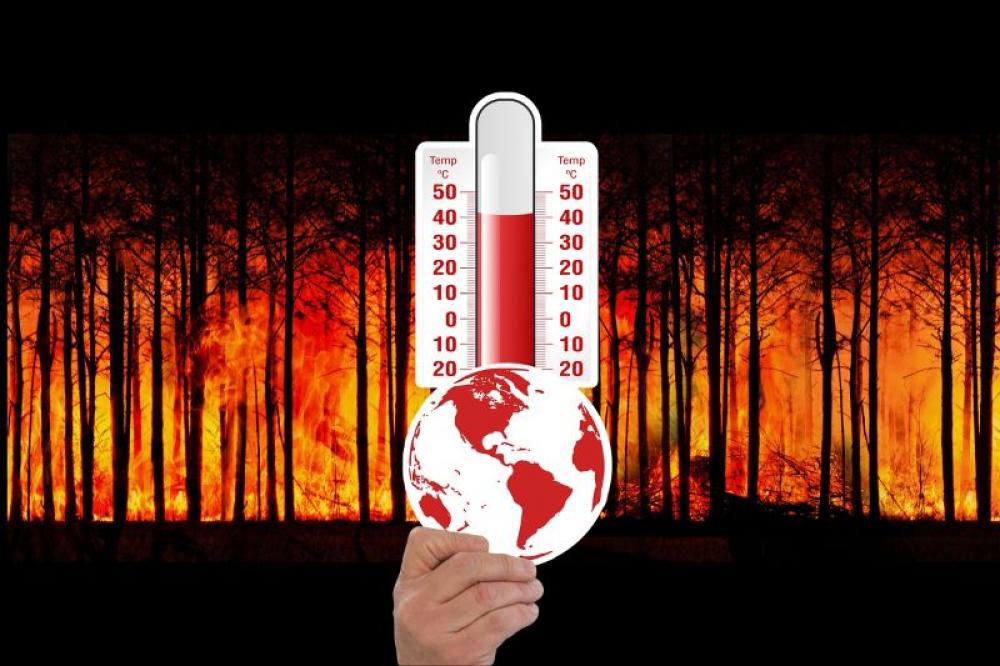 Extreme Heat
 Study says global population living with extreme heat to double by 2050. Photo: Pixabay
A new University of Oxford study warns that nearly half of the world’s population—around 3.79 billion people—could be living under extreme heat conditions by 2050 if global temperatures rise by 2.0°C above pre-industrial levels, a scenario climate scientists now view as increasingly likely.
The researchers caution that many of the most severe impacts will emerge even earlier, as the world crosses the 1.5°C warming threshold set by the Paris Agreement. In 2010, about 23% of the global population was exposed to extreme heat; this figure is projected to rise sharply to 41% in the coming decades.
Published in Nature Sustainability, the study highlights far-reaching consequences for human health, infrastructure, and economic stability.
According to the University of Oxford, countries expected to experience the steepest increases in dangerously high temperatures include the Central African Republic, Nigeria, South Sudan, Laos, and Brazil. Meanwhile, the largest numbers of people affected will be concentrated in India, Nigeria, Indonesia, Bangladesh, Pakistan, and the Philippines.
The research also shows that nations with traditionally colder climates will undergo disproportionately large relative increases in uncomfortably hot days. Compared with the 2006–2016 period—when global temperatures were already about 1°C above pre-industrial levels—warming to 2°C would result in a doubling of hot days in Austria and Canada, a 150% increase in the UK, Sweden, and Finland, a 200% rise in Norway, and a 230% surge in Ireland.
“Our study shows that most changes in cooling and heating demand occur before reaching the 1.5°C threshold,” said lead author Dr Jesus Lizana, Associate Professor of Engineering Science at Oxford. “This means significant adaptation measures will need to be implemented much earlier than many policymakers currently anticipate.”
The authors warn that the built environment in colder countries—largely designed for low temperatures—may be particularly vulnerable. Even moderate warming could have severe impacts where homes, infrastructure, and energy systems are poorly equipped to handle prolonged heat.
For instance, millions of homes may require air-conditioning installations within the next five years, even though temperatures are expected to continue rising well beyond that period if global warming reaches 2.0°C.
“To achieve the global goal of net-zero carbon emissions by 2050, we must rapidly decarbonise the building sector while simultaneously developing more resilient and effective adaptation strategies,” Dr Lizana added.
Dr Radhika Khosla, Associate Professor at the Smith School of Enterprise and the Environment and head of the Oxford Martin Future of Cooling Programme, described the findings as a critical warning. “Overshooting 1.5°C of warming will have unprecedented impacts on education, health, migration, and agriculture,” she said.
The projected rise in extreme heat is also expected to significantly increase global energy demand for cooling, driving up emissions, even as demand for heating declines in countries such as Canada and Switzerland.
The study further introduces an open-source global dataset on heating and cooling demand, featuring 30 high-resolution maps (≈60 km) that track climate intensity through ‘cooling degree days’ and ‘heating degree days’ worldwide. Researchers say the dataset offers a robust foundation for integrating accessible climate data into sustainability planning and development policy.
- Rescue race in Nepal: 10 missing after avalanche buries base camp
- 'Glaciers don’t travel with a visa': Nepal PM Balen Shah’s big UNGA climate warning
- 451,000 lives at risk? New study reveals super El Nino’s deadly heat impact
- Heatwave shock: UK sees hottest day of the year at 38.1 °C
- Red alert, rising deaths: UK's deadly heatwave leaves nearly 2,900 dead
-1791127926.jpg "Image of the day: October 4, 2026")