
Just Earth News | @justearthnews | 05 Mar 2026, 08:45 pm Print
 Russian Oil
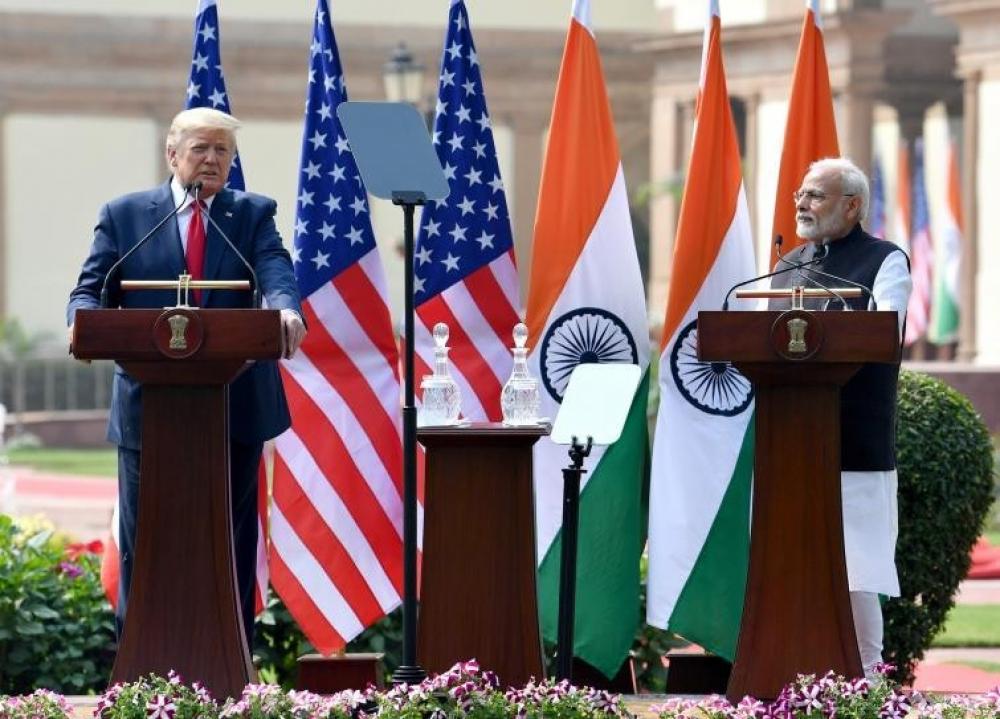
 A file image of Donald Trump and PM Narendra Modi when they met in the past. Photo: PIB
The United States on Thursday granted a temporary waiver to India, allowing Indian refiners to purchase Russian oil.
President Trump’s energy agenda has resulted in oil and gas production reaching the highest levels ever recorded.
— Treasury Secretary Scott Bessent (@SecScottBessent) March 6, 2026
To enable oil to keep flowing into the global market, the Treasury Department is issuing a temporary 30-day waiver to allow Indian refiners to purchase Russian oil.…
Announcing the decision, US Treasury Secretary Scott Bessent wrote on X: “President Donald Trump’s energy agenda has resulted in oil and gas production reaching the highest levels ever recorded.”
“To enable oil to keep flowing into the global market, the Treasury Department is issuing a temporary 30-day waiver to allow Indian refiners to purchase Russian oil,” he said.
Bessent said the deliberately short-term measure would not provide any significant financial benefit to the Russian government, as it authorises only transactions involving oil that is already stranded at sea.
He added: “India is an essential partner of the United States, and we fully anticipate that New Delhi will ramp up purchases of US oil.”
“This stop-gap measure will alleviate pressure caused by Iran’s attempt to take global energy hostage,” he said.
Also Read: Foreign submarine attack? Iranian ship sinks close to Sri Lanka, over 100 missing: Reports
The US Department of the Treasury’s Office of Foreign Assets Control (OFAC) has issued Russia-related General License 133, titled “Authorizing the Delivery and Sale of Crude Oil and Petroleum Products of Russian Federation Origin Loaded on Vessels as of March 5, 2026 to India.”
Strait of Hormuz gridlock
Oil shipments through the Strait of Hormuz have slowed to a near standstill, disrupting one of the world’s most critical energy corridors and rattling global markets.
Maritime tracking data shows that nearly 86 percent of normal east-west crude traffic has stalled, creating a bottleneck that threatens to destabilise fuel supplies across Asia and Europe.
According to shipping analytics firms Windward and Kpler, the waterway remains technically open, but vessel movement has collapsed.
On March 1, only three tankers carrying about 2.8 million barrels transited the strait, compared with the 2026 daily average of 19.8 million barrels. On March 2, just one small tanker and one cargo ship navigated the main shipping lanes.
The congestion has intensified on both sides of the strait.
Around 706 non-Iranian tankers are now clustered near the chokepoint, including 334 crude carriers, 109 dirty product tankers and 263 clean product vessels.
- US prep school teacher, 27, jailed for sexual conduct with minor, filmed encounters
- Pakistan opens up road trade routes into Iran amid Trump's Hormuz blockade
- US: Man arrested for allegedly attacking woman, biting her three-year-old daughter in San Antonio park
- US to launch limited edition passports with Trump’s face and signature for 250th anniversary
- UAE leaves OPEC, OPEC+ as energy crisis deepens across global oil markets