
Just Earth News | @justearthnews | 17 Jul 2026, 10:26 pm Print
 US-Iran
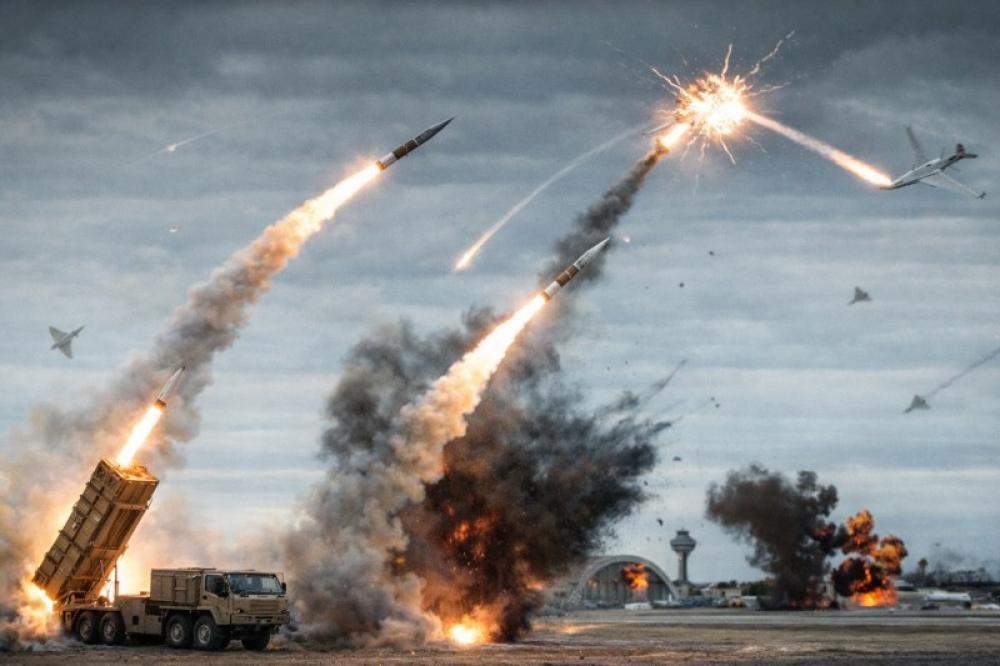
 US launches new wave of strikes on Iran. Photo: AI recreated
The United States military has carried out its seventh consecutive day of strikes on Iran, with tensions continuing to escalate across the Middle East.
Providing details of the latest operation, the US Central Command (CENTCOM) said on X that it targeted Iranian surveillance sites, military logistics infrastructure, underground weapons storage facilities, and maritime capabilities.
According to CENTCOM, the operation involved fighter aircraft, armed drones, warships, and other military assets.
"CENTCOM continues to hold Iran accountable at the Commander in Chief's direction while fully enforcing a naval blockade against Iranian ports," the command said in a post on X.
— U.S. Central Command (@CENTCOM) July 18, 2026
CENTCOM also stated that more than 50,000 American service members remain deployed across the Middle East and are "vigilant, lethal, and ready."
Meanwhile, the United Nations expressed deep concern over the continued military escalation between Iran and the United States.
"The Secretary-General remains deeply concerned by the continuing deadly military escalation between Iran and the United States," UN Deputy Spokesperson Farhan Haq said on Friday.
"He is particularly concerned about attacks on civilian infrastructure in Iran and across the region. Such attacks are unacceptable," Haq added.
Interim agreement under strain
A month ago, Tehran and Washington signed a Memorandum of Understanding (MoU) following an intense US-Israeli bombing campaign launched in late February.
Since then, Iran has carried out retaliatory strikes, saying they targeted US military bases and infrastructure in neighbouring Gulf states. The attacks have further destabilised the region and disrupted commercial shipping through the Strait of Hormuz, a strategic waterway that carries nearly one-fifth of the world's oil and gas supplies.
Kuwaiti authorities reported on Friday that Iranian strikes had damaged a power generation and desalination plant. Officials said the extent of the damage is still being assessed.
The interim agreement under the MoU included a ceasefire and the reopening of the Strait of Hormuz to commercial shipping.
However, differing interpretations of the agreement have emerged. Iran maintains that the MoU allows Tehran to retain ultimate control over the strategic waterway and impose tolls for safe passage. The United States and the broader international community have rejected that interpretation, insisting that the Strait of Hormuz must remain open to free navigation without transit fees.
- Trump announces Russia-Ukraine energy ceasefire, Zelenskyy reacts
- US, UN and Canada condemn deadly Houthi attack on Saudi airport
- Trump announces Russian diesel deal, tells Zelenskyy's Ukraine needs a new President
- Trump administration imposes sanctions on ICC; UN Chief Guterres condemns move
- US targets Microsoft, Infosys, TCS in Green Card crackdown. How will it impact IT employees?
-1791127926.jpg "Image of the day: October 4, 2026")