
Just Earth News | @justearthnews | 04 May 2026, 10:51 pm Print
 US-Iran
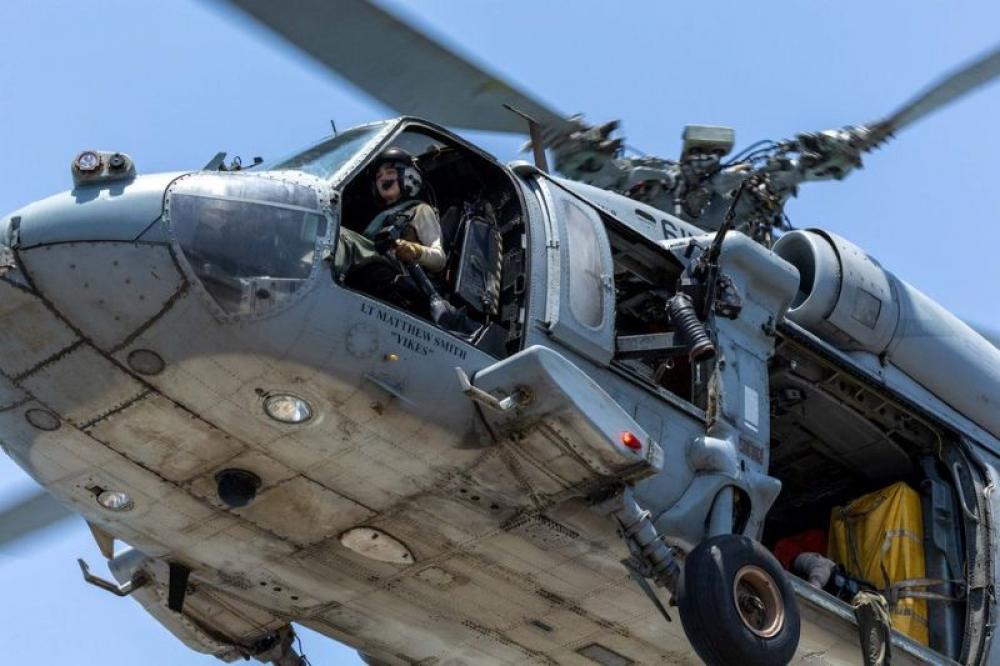
 U.S. Navy MH-60 Sea Hawk helicopters are supporting Project Freedom in and near the Strait of Hormuz. Photo: CENTCOM/X
Two U.S. Navy destroyers successfully transited the strategic Strait of Hormuz and entered the Persian Gulf despite coming under what American media described as coordinated Iranian fire.
The warships — USS Truxtun and USS Mason — were supported by Apache helicopters and other aircraft as they navigated the volatile passage, officials told CBS News.
According to the report, Iranian forces deployed small boats, missiles, and drones in a sustained barrage targeting the vessels. However, none of the attacks struck the ships. U.S. defense officials said layered defensive systems, backed by air support, successfully intercepted or deterred all incoming threats, ensuring the safe passage of the destroyers.
The incident comes amid heightened tensions following U.S. President Donald Trump’s announcement of “Operation Project Freedom,” a mission aimed at escorting commercial vessels stranded in the Strait of Hormuz and ensuring the free flow of maritime trade.
U.S. Air Force F-16 fighter aircraft are among more than 100 land and sea-based aircraft supporting Project Freedom. During the defensive operation, these advanced warfighting platforms are helping to protect U.S. forces and defend commercial shipping. pic.twitter.com/7boqPZ1rSZ
— U.S. Central Command (@CENTCOM) May 5, 2026
In a statement posted on X, US Central Command confirmed that F-16 fighter jets are among more than 100 air and sea-based assets supporting the operation. “These advanced warfighting platforms are helping to protect U.S. forces and defend commercial shipping,” the command said.
CENTCOM further noted that U.S. warships and aircraft deployed in the region are enforcing a naval blockade against Iran while executing Project Freedom to maintain maritime security.
Responding to the developments, Iranian Foreign Minister Abbas Araghchi said the situation in the Strait of Hormuz underscores that there is no military solution to a political crisis. He criticised the U.S. mission, calling it “Project Deadlock,” and warned against escalating tensions, even as diplomatic efforts reportedly continue with regional mediation.
Amid conflicting claims over recent confrontations, the International Maritime Organization has urged vessels operating in the region to exercise “maximum caution.”
Events in Hormuz make clear that there's no military solution to a political crisis.
— Seyed Abbas Araghchi (@araghchi) May 4, 2026
As talks are making progress with Pakistan's gracious effort, the U.S. should be wary of being dragged back into quagmire by ill-wishers. So should the UAE.
Project Freedom is Project Deadlock.
Maritime security concerns have intensified in recent days. According to the UK Maritime Trade Operations (UKMTO), a tanker was reportedly struck by unidentified projectiles off the coast of Fujairah on May 4, while a bulk carrier faced an attack by multiple small craft near Iran a day earlier. Other vessels have been instructed to move from their anchorages, reflecting the increasingly volatile situation.
Since late February, at least 41 incidents involving ships in the Arabian Gulf, the Strait of Hormuz, and the Gulf of Oman have been reported, highlighting growing risks to one of the world’s most critical shipping routes.
- When will Sheikh Hasina return to Bangladesh? Ex-PM sends strong message to current government
- 'Look inwards': India issues sharp response to Pakistan after Islamabad's allegations on Karachi terror strike
- Strait of Hormuz erupts again: US retaliates after Iran targets cargo vessel
- Iran-US crisis: Fresh attack rocks Strait of Hormuz as UN halts ship evacuations
- Trump says oil prices are falling after record 19 million barrels pass Hormuz