

Just Earth News | @justearthnews | 29 Jul 2026, 03:15 am Print
 Cancer
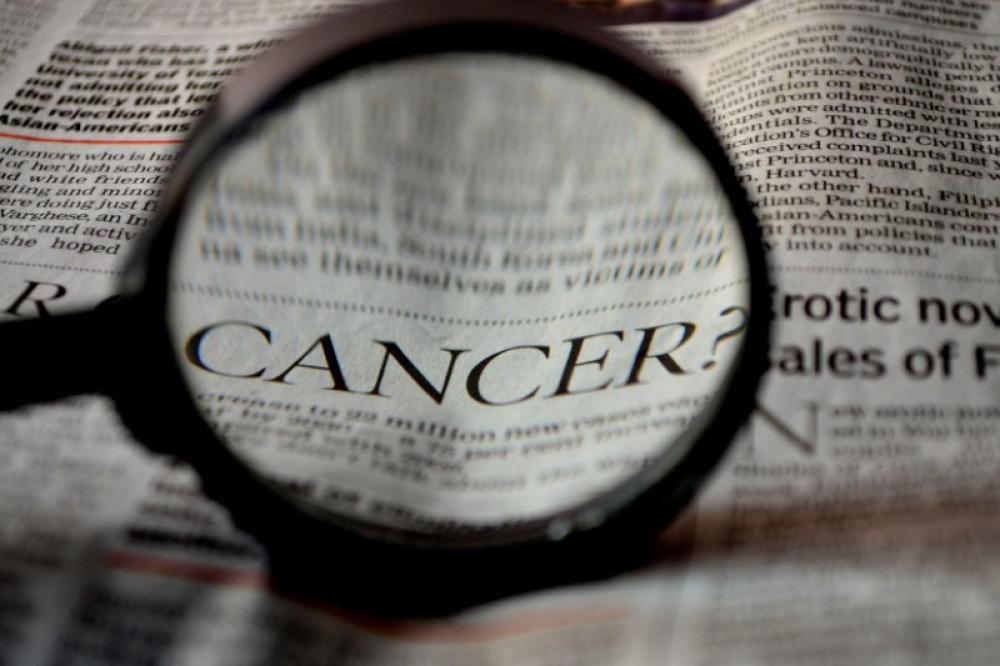
 Scientists find answer to why some people get cancer while others don't. Photo: Unsplash
Scientists have uncovered the first direct evidence showing that a person's inherited genes play a powerful role in determining cancer risk by influencing how tumors develop and evolve alongside acquired genetic mutations.
The findings, published in the journal Nature, help explain why some people develop cancer while others exposed to the same environmental risk factors do not. The research also suggests that future cancer screening, prevention, and treatment strategies may need to place greater emphasis on inherited genetics and population diversity, according to the University of Cambridge.
Conducted in mice by an international team led by researchers from the University of Cambridge, the University of Edinburgh, and collaborators across Europe and the United States, the study also indicates that patients' responses to DNA-damaging cancer treatments may vary depending on their genetic background, strengthening the case for more personalized cancer care.
Cancer develops when DNA accumulates mutations that allow damaged cells to grow uncontrollably instead of dying naturally. Environmental factors such as cigarette smoke and ultraviolet radiation contribute to DNA damage, while inherited genetic variations can influence how many mutations accumulate.
However, not everyone exposed to the same environmental risks develops cancer. For example, many smokers never develop lung cancer, while some non-smokers do. Scientists have long suspected that inherited genetic differences help explain this variation, but proving the connection in humans has been difficult because of differences in lifestyle, environmental exposure, and genetic diversity.
To overcome these challenges, researchers developed an experimental model that eliminated environmental variation. Working primarily at the Cancer Research UK (CRUK) Cambridge Institute, they bred four strains of mice with varying susceptibility to liver cancer, representing a level of genetic diversity comparable to that seen in human populations.
Each mouse received the same dose of the liver carcinogen diethylnitrosamine (DEN)—a chemical found in tobacco smoke and some processed foods that is known to damage DNA in liver cells—at 15 days of age under tightly controlled laboratory conditions.
The researchers then sequenced the genomes of nearly 600 tumors, analyzed gene activity, and compared spontaneous tumor formation across the different mouse strains. This enabled them to reconstruct how each tumor evolved from its original cancer-causing mutation.
The team found that tumors across all mouse strains almost always acquired mutations that activated the MAPK pathway, a key signaling system involved in regulating cell growth and differentiation and implicated in many types of cancer.
However, the specific mutations and the way tumors evolved varied significantly depending on the mice's inherited genetic background. These inherited differences also influenced other cancer-related signaling pathways and increased the likelihood of whole-genome duplication, a process in which the entire set of chromosomes is duplicated.
Senior author Professor Duncan Odom, who led the research while at the CRUK Cambridge Institute and is now based at the German Cancer Research Centre (DKFZ) in Heidelberg, said the findings demonstrate that cancer is not driven entirely by chance.
"Although tumors often reach the same biological endpoint, the path to that endpoint is determined by an individual's genetic background," Odom said. "We've been able to show for the first time the extent to which genetic background influences both the mutation processes and the pathways leading to tumor development."
The researchers believe the findings could have significant implications for precision medicine and cancer prevention.
First author Dr. Sarah Aitken, now an Assistant Professor at Yale School of Medicine, said that if inherited genetic background influences both cancer risk and tumor evolution, future prevention and screening strategies must better account for genetic diversity across populations.
She added that inherited genetics may also influence how patients respond to cancer therapies, making it increasingly important to tailor diagnostic approaches and treatments to individual genetic profiles.
Commenting on the study, Cancer Research UK research information lead Dr. Sam Godfrey said the findings offer an important insight into how inherited genes may shape cancer development following DNA damage.
While further research is needed to determine whether the findings translate directly to humans, he said the study could fundamentally improve scientists' understanding of how cancer begins and pave the way for more precise and effective treatments.
- 'Exponential' Ebola spread in DR Congo: UN urges immediate action
- Mpox Outbreak In Guinea-Bissau: 16 children under 4 among suspected cases, says study
- Think your heart is healthy? Doctor reveals 5 habits you should quit now
- Flying could be riskier than you think: Study shows pilots, flight attendants face highest radiation-linked cancer deaths
- Is your diet putting you at risk? Study links ultra-processed foods to prostate cancer
-1786284396.jpg "Image of the day: August 9, 2026")

-1785937004.jpg "Image of the day: August 5, 2026")