Top pick: Trump announces Russia-Ukraine energy ceasefire, Zelenskyy reacts


Just Earth News | @justearthnews | 09 Jul 2026
#Ayatollah Ali Khamenei #Khamenei funeral #Khamenei burial #Imam Reza Shrine #Mashhad #Iran Supreme Leader #Iran news
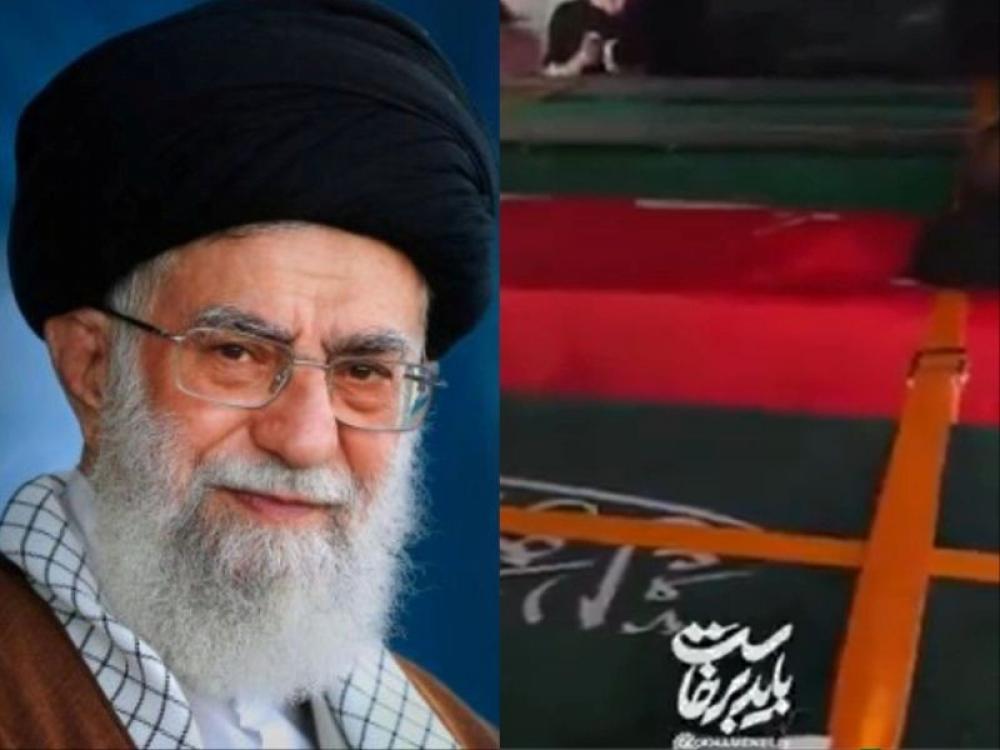
Ali Khameni was buried at his hometown of Mashhad. Photo: X/Videograb
The body of Iranian Supreme Leader Ayatollah Seyed Ali Khamenei was laid to rest on Thursday at the Imam Reza Shrine in Mashhad, bringing to a close days of large-scale funeral and mourning ceremonies held across Iran and Iraq, media reports said.
According to reports, Khamenei's coffin travelled from Iraq, where thousands of mourners participated in funeral processions in the holy cities of Najaf and Karbala, before returning to Iran for the final rites.
The funeral cortege reached Mashhad after five days of mourning ceremonies in Tehran, the clerical city of Qom, and the Iraqi cities of Najaf and Karbala.
Millions of mourners gathered in Mashhad as nationwide mourning culminated in a final farewell ceremony at the Imam Reza Shrine, Iran's holiest Shia shrine, Tasnim News Agency reported.
Among those attending the funeral were Parliament Speaker Mohammad Baqer Qalibaf, Judiciary Chief Gholam Hossein Mohseni Ejei, former Vice President Mohammad Mokhber, and Mashhad Friday prayer leader Ayatollah Seyed Ahmad Alamolhoda.
According to reports, the funeral prayers were led by Khamenei's son, Ayatollah Seyed Mostafa Khamenei.
Ayatollah Seyed Ali Khamenei was reportedly killed in a US-Israeli strike in Iran on February 28, an event that triggered the ongoing Middle East conflict.
The Imam Reza Shrine is Iran's holiest Shia pilgrimage site and the burial place of Imam Reza, the eighth Shia Imam and the only one of the twelve Shia Imams buried within Iran. The shrine also serves as the resting place of several former Iranian rulers and former President Ebrahim Raisi, who died in a helicopter crash in 2024.
Khamenei's funeral took place against the backdrop of renewed military escalation in the Middle East.
Even as preparations for his burial were underway, Iran and the United States exchanged strikes for a second consecutive day.
Iran claimed it had resumed attacks targeting US military bases in Kuwait, Bahrain and Qatar. The latest escalation, linked to tensions surrounding the Strait of Hormuz, has renewed fears of a broader regional conflict.
Renewed hostilities between Iran and the United States reportedly brought commercial shipping to a near standstill in the Strait of Hormuz on Thursday, leaving around 6,000 seafarers stranded aboard hundreds of vessels and prompting Gulf nations to remain on high alert.
Echoing UN Secretary-General António Guterres' concerns over the renewed exchange of strikes, member states of the UN's International Maritime Organization (IMO) Council condemned Iran for its "continued threats" and alleged attacks against multiple Gulf states and their territorial waters.
Calling for the protection of vital maritime trade routes, several countries—including Bahrain, France, Germany and Saudi Arabia—highlighted the growing disruption to sea transport, particularly in and around the Strait of Hormuz, one of the world's most critical energy corridors.
In a separate submission, Iran accused the United States and Israel of "armed interference with Iranian commercial vessels" and acts of aggression.
IMO Secretary-General Arsenio Dominguez urged that all transit through the Strait of Hormuz be avoided "until the necessary safety conditions are in place" and said evacuation efforts for stranded seafarers would remain suspended due to security concerns.
According to IMO data, 136 ships and approximately 2,900 seafarers have been evacuated so far.
According to Iranian health authorities, 14 people have been killed over the past two days of hostilities, while dozens more have been injured in strikes across five provinces.
The reported attacks in the Strait of Hormuz on Tuesday also triggered a temporary surge in global crude oil prices. Prices later eased on Thursday to around $77 per barrel, though they remained above pre-conflict levels.
The renewed fighting comes despite a ceasefire agreement signed by Iran and the United States on June 17. According to reports, three merchant vessels were struck while transiting the Strait of Hormuz on Tuesday, further heightening concerns over maritime security in the strategically vital waterway.