Top pick: Italy, Spain, Belgium, Portugal: Europe erupts in protests as energy costs soar, housing crisis deepens


Just Earth News | @justearthnews | 10 Jul 2026
#oral cancer test #oral cancer detection #brush biopsy test #non-invasive cancer test #qMIDS-V3 #mouth cancer
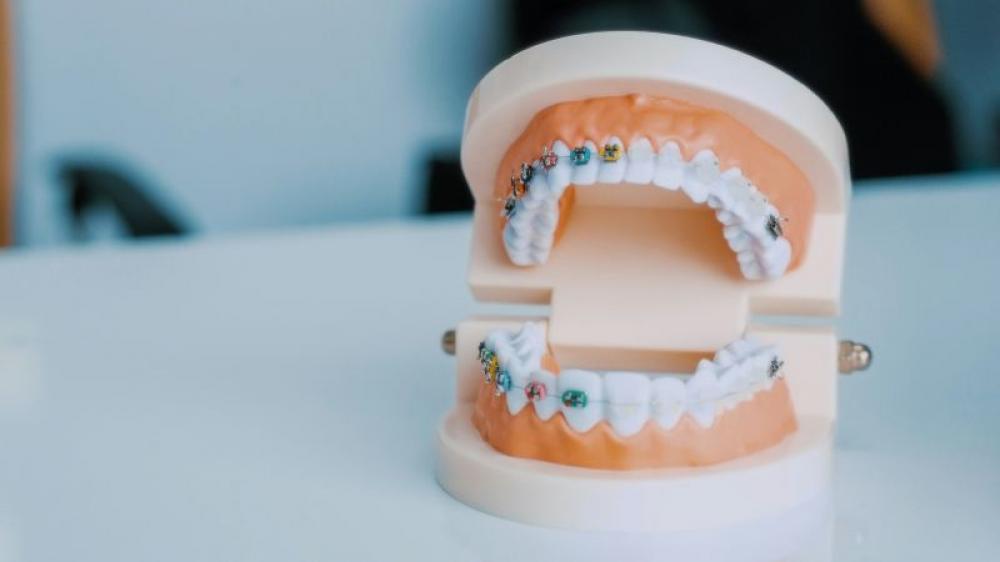
A non-invasive brush biopsy test can detect oral cancer within an hour. Photo: Unsplash
A non-invasive brush biopsy test can detect oral cancer within an hour and could help prevent more than 90% of unnecessary invasive scalpel biopsies, according to a new study.
The paper, published in Biomarker Research, a Nature Portfolio journal, was authored by a cross-university team led by researchers at Queen Mary University of London.
The test could potentially revolutionise oral cancer detection by offering a rapid and non-invasive alternative to conventional scalpel biopsies. Such procedures can be painful, carry a risk of infection and, in some areas of the mouth such as the gums, can be difficult to perform and may damage underlying tooth or bone structures.
Oral cancer a growing global concern
Oral cancer is a growing global health threat. According to Global Burden of Disease data, lip and oral cancer is among the world's most rapidly increasing causes of early death.
More than 10,000 people in the UK were diagnosed with oral cancer last year, according to the charity Mouth Cancer, while 3,637 people died from the disease.
Worldwide, oral cancer affects around 650,000 people annually. Major risk factors include tobacco use and smoking, alcohol consumption, infection with the human papillomavirus (HPV), and sun damage.
More than half — 53% — of all mouth cancers are diagnosed at Stage IV, when the disease is at its most advanced.
The latest study, described as the largest of its kind, involved more than 1,000 samples from 545 patients.
Early diagnosis and the problem with scalpel biopsies
Early diagnosis of oral squamous cell carcinoma (OSCC) is critical. However, most oral potentially malignant disorders (OPMDs) are benign, meaning patients frequently undergo unnecessary invasive scalpel biopsies, potentially causing discomfort, harm and diagnostic delays.
A scalpel biopsy can be particularly painful when performed on the tongue, the most common site of oral cancer, and the prospect of repeated procedures may discourage both patients and clinicians from carrying them out frequently and promptly.
Researchers said a non-invasive tool is urgently needed for long-term surveillance and timely detection of OSCC.
The study investigated whether a previously validated microbiopsy-based multigene assay, qMIDS-V2, could be adapted into a rapid, non-invasive brush biopsy test called qMIDS-V3.
The findings showed that the new test works and could potentially spare more than 90% of low-risk OPMD patients from unnecessary invasive tissue biopsies.
“Oral cancer survival is directly linked to how early it is found, yet our current diagnostic pathway is blunt — most patients with a suspicious lesion end up having an invasive biopsy even when the overwhelming likelihood is that it is benign,” said lead researcher Muy-Teck Teh, Professor of Molecular Oral Oncology at Queen Mary University of London.
“This test changes that. It gives clinicians a rapid, accurate and non-invasive way to triage patients, and crucially, it can be repeated.
“That means we can now monitor patients with persistent pre-malignant lesions regularly and systematically — and pick up cancers much earlier than we would have been able to before,” he added.
Test could reduce unnecessary referrals
In the UK, a 10-year audit reported a 450% increase in two-week-wait referrals alongside a 50% decline in the cancer detection rate.
Subsequent audits found that 92.5% to 99.5% of referred patients were cancer-free, with 96% to 98% remaining cancer-free at five-year follow-up.
Researchers said the findings highlight substantial over-referral and inefficiencies in current diagnostic pathways.
Implementing a rapid, non-invasive triage test such as qMIDS-V3 could reduce unnecessary referrals for more than 90% of cancer-free patients and ease the clinical and financial burden associated with managing OPMDs and OSCC.
The test also supports repeat brush biopsies, a key capability for long-term surveillance. This could help detect malignant transformation in patients with OPMDs while avoiding the need for multiple scalpel biopsies.
Brush swab performs comparably to microbiopsy
The latest study builds on a substantial body of previous clinical validation.
The second-generation test, qMIDS-V2, was developed as a microbiopsy-based assay requiring only a 1 mm tissue sample. It was validated using more than 530 samples from three countries — the UK, India and China.
The cross-continental validation established the robustness of the underlying multigene signature across diverse patient populations and clinical settings.
What researchers found particularly striking was that qMIDS-V3, which requires only a non-invasive brush swab of the mouth and involves no tissue removal, achieved performance highly comparable to its microbiopsy-based predecessor.
“We were genuinely astonished by the fact that the brush swab test performance is comparable to a microbiopsy,” Teh said.
“It suggests that the biological signal captured by these four genes is sufficiently strong and consistent that it can be detected even from the superficial exfoliated cells collected by a brush biopsy.
“The clinical implications are significant: patients no longer need even a minimally invasive procedure to benefit from molecularly guided triage,” he added.
A new tool for monitoring high-risk patients
Beyond initial diagnosis, the test could offer another major clinical benefit: because it is non-invasive and repeatable, it could be used to monitor patients with persistent OPMDs over time.
These conditions carry a risk of malignant transformation that can be difficult to predict clinically. Serial testing could significantly improve the chances of detecting early-stage cancers in high-risk patients, when treatment is most likely to be successful and survival outcomes are better.
The research team included scientists from Queen Mary University of London's Centre for Oral Immunobiology & Regenerative Medicine, King George's Medical University, Modern Dental College & Research Centre, and the All India Institute of Medical Sciences.
Queen Mary University of London is now seeking a commercial partner to help develop the inexpensive test for clinical use.
With the right commercial partner, researchers said the test could be available for clinical use within two years.