Top pick: Ultra-processed foods may be rewiring children's brains, new study warns


Just Earth News | @justearthnews | 29 Oct 2026
#Russia Ukraine war #Russian drone attack #Dnipro railway station attack #Ukraine railway station strike #Volodymyr Zelenskyy #Russia drone strike #Ukraine latest news #Dnipro attack
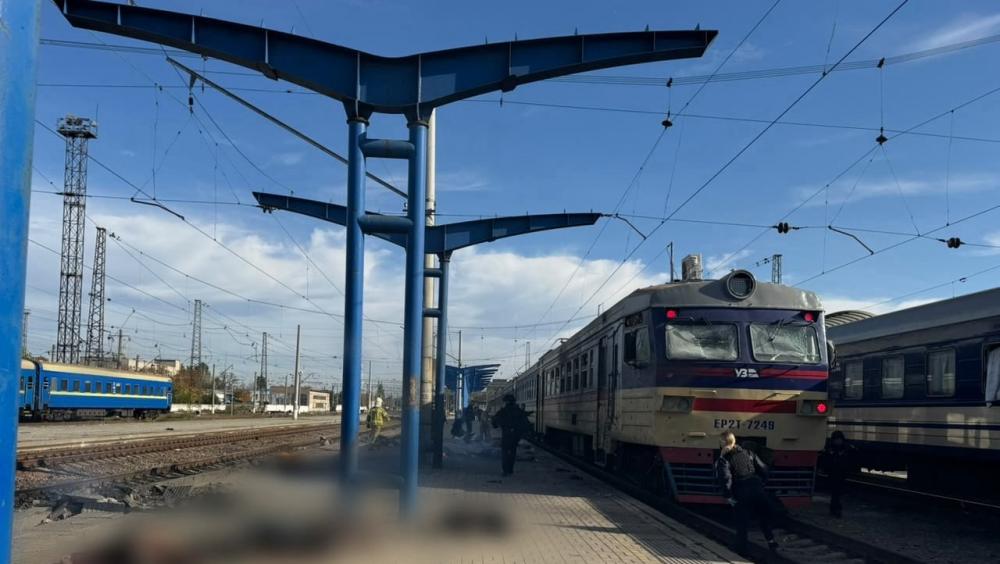
The UN’s top humanitarian official in Ukraine on Thursday condemned a Russian drone attack on the city of Dnipro. Photo: Volodymyr Zelenskyy/X
At least 14 people were killed after a Russian drone strike hit the main railway station in the central Ukrainian city of Dnipro, Ukraine's President Volodymyr Zelenskyy said.
"A horrific Russian strike on the railway station in Dnipro. The Russians launched a drone attack on a platform where an ordinary commuter train and a scheduled passenger train were standing. Unfortunately, 13 people have been confirmed killed as of now," Zelenskyy wrote on X.
He later revised the death toll to 14, while 10 others were reported injured.
"My condolences to their families and loved ones. Ten more people were injured. All necessary emergency services are working at the scene," he said.
A horrific Russian strike on the railway station in Dnipro. The Russians launched a drone attack on a platform where an ordinary commuter train and a scheduled passenger train were standing. Unfortunately, 13 people have been confirmed killed as of now. My condolences to their families and loved ones. Ten more people were injured. All necessary emergency services are working at the scene. Just how many terrorist strikes has Russia carried out against our people since sanctions were lifted on certain Russian oligarchs and the Russian energy sector, rather than de-escalating? This is precisely why Ukraine has always said that just and decisive action by America and Europe is needed in response to Russian escalation – sanctions against Moscow and its war machine must not be eased for as long as this Russian war continues. It is time for new, stronger sanctions steps by the EU, the United States, and the G7. I thank everyone who is ready to help in this way.
— Volodymyr Zelenskyy / Володимир Зеленський (@ZelenskyyUa) October 29, 2026
Zelenskyy also criticised the easing of sanctions against Russia, arguing that Moscow's continued military escalation required a stronger response from Washington and European capitals.
"Just how many terrorist strikes has Russia carried out against our people since sanctions were lifted on certain Russian oligarchs and the Russian energy sector, rather than de-escalating?" he asked.
"This is precisely why Ukraine has always said that just and decisive action by America and Europe is needed in response to Russian escalation – sanctions against Moscow and its war machine must not be eased for as long as this Russian war continues," he added.
Meanwhile, Russia and Ukraine have been observing a ceasefire in the southern Kherson region, reportedly brokered by US First Lady Melania Trump.
The UN's top humanitarian official in Ukraine on Thursday condemned the Russian drone attack on Dnipro.
"Civilians preparing for a trip, welcoming or bidding farewell to loved ones faced death and devastation," said Matthias Schmale, the UN Humanitarian Coordinator for Ukraine.
He added that displaced people and humanitarian workers at a transit centre inside the railway station were left in shock by the explosions nearby.
Schmale expressed condolences to the families of those killed on behalf of the United Nations, noting that rail travel remains a vital mode of transportation in Ukraine.
Since the beginning of the year, passengers and railway workers have faced growing risks during their journeys due to Russian military strikes and air raid alerts, which have affected the safety and reliability of train services.
According to figures from Ukraine's railway operator cited by media reports, attacks on railway facilities have increased from 1,206 in 2025 to 1,700 so far this year.
Schmale said civilian infrastructure critical to everyday life, including bridges, hospitals, schools, shopping centres and railway stations, had come under repeated attack across Ukraine in recent months.
"The images from Dnipro cannot become another story that fades from attention. Behind every casualty is a person, a family and a future changed forever," Schmale said.
"It cannot be repeated often enough that civilians and civilian infrastructure are protected under international humanitarian law," he added.
In an interview with UN News on Thursday, Schmale also said preparations to deliver humanitarian aid to Oleshky, a Russian-occupied town in the Kherson region, were accelerating amid a local ceasefire.
He said aid deliveries could reach the town as early as Friday.
The ceasefire, reportedly brokered by US First Lady Melania Trump and announced by the White House on October 23, is scheduled to end on the evening of November 1.
Ukraine's Parliament Commissioner for Human Rights, Dmytro Lubinets, said he was travelling to the town and would accompany residents during their evacuation.
Schmale identified mined roads as a major obstacle preventing residents from leaving the town. He referred to images of a stretch of road locally known as the "road of death".
"It's clear any safe passage both in and out has to have mine clearance preceding it," he said, adding that reports reaching him indicated demining operations were under way.
UN's Offer Of Support 'Not Taken Up'
The United Nations has no direct role in organising the evacuation, Schmale said.
"We have offered support, but it's not been taken up," he said, adding that none of the UN's humanitarian partners had been involved either.
Under established procedures, evacuees will receive assistance once they reach areas under Ukrainian government control.
The support could include food and other essential supplies, as well as assistance in finding accommodation.
"There's a high likelihood that we will get involved the minute they are here," Schmale said.
More Than 1,000 People May Remain In Oleshky
Schmale said estimates of the number of people expected to leave Oleshky varied, but he had heard that between 200 and 300 residents might be evacuated.
That would leave more than 1,000 people in the town who would continue to require humanitarian assistance, he added.
His assessment was based on information from UN human rights monitors, civil society organisations and Ukrainian authorities.
The town's remaining healthcare facility was "barely functional" and facing shortages of medicines, Schmale said.
He warned that access to heating during the winter, amid disruptions to energy supplies, would become an increasingly serious challenge.
Safe drinking water and the restoration of public infrastructure were also pressing concerns.
Schmale further stressed that the psychological impact of prolonged bombardment should not be overlooked.
"Because they've been trapped in that place for so long under heavy bombardment, mental health issues should never be overlooked," he said.