Top pick: Trump administration imposes sanctions on ICC; UN Chief Guterres condemns move


Just Earth News | @justearthnews | 09 Oct 2026
#Donald Trump #US sanctions ICC #International Criminal Court #ICC sanctions #Marco Rubio #António Guterres
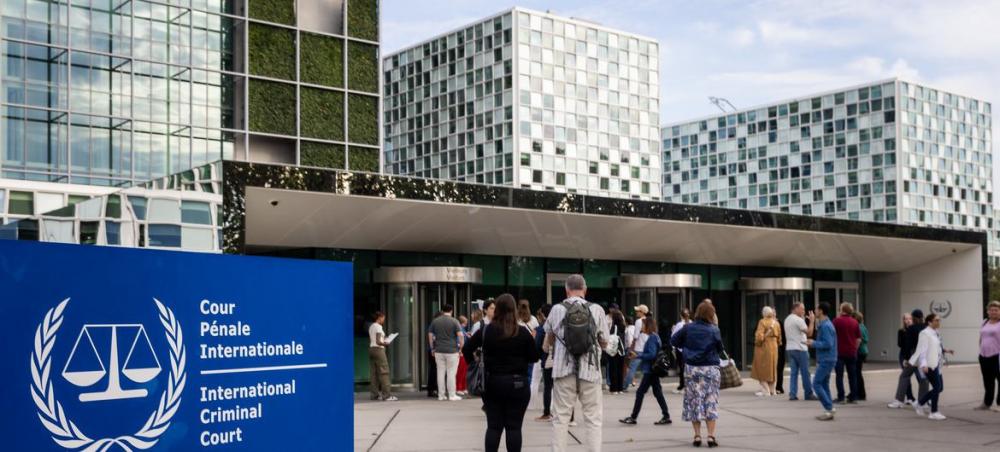
US imposes sanctions on International Criminal Court. Photo: International Criminal Court
The Donald Trump-led US administration on Friday imposed sanctions on the International Criminal Court (ICC), triggering a diplomatic clash with the international judicial body.
The sanctions were announced just hours after former ICC judge Navi Pillay won the Nobel Prize.
Announcing the move, US Secretary of State Marco Rubio said the Trump administration would not allow the ICC to prosecute American citizens.
“President Trump will never allow the International Criminal Court to prosecute Americans. That is why, today, the United States is sanctioning the International Criminal Court,” Rubio said in a statement.
“We will ban transactions with this rogue court, cutting off its resources and crippling its ability to operate,” he added.
Rubio said Washington had made clear for more than a year the steps it expected the ICC to take as a gesture of good faith. The US had deferred the sanctions in the hope that the court would change course or that its member states would take action to address Washington’s concerns.
“However, neither the ICC nor States Parties have yet taken meaningful steps to address our concerns,” he said.
Despite the decision, Rubio said Washington remained open to a diplomatic solution, adding that the sanctions had been structured to give member states an opportunity to negotiate and address US concerns.
“If these efforts do not bear fruit, we will continue to adjust accordingly,” he said.
The ICC strongly condemned the US decision, describing it as unprecedented and pointing to existing American sanctions against 13 of its judges and prosecutors.
The court called the latest measure “an assault on the rule of law and on the very foundations of the international legal order”.
According to the ICC, the sanctions are intended to disrupt its operations and intimidate those who work for or cooperate with the court. However, it vowed to continue carrying out its mandate.
“The court will continue to fully discharge its mandate, with independence and impartiality, acting only on the basis of the law and the evidence for the sake of the countless victims of grave crimes,” ICC President Tomoko Akane said.
United Nations Secretary-General António Guterres strongly criticised the US decision, according to his spokesperson, Stéphane Dujarric.
Guterres condemned the sanctions against the ICC as an institution and expressed deep concern about their potential impact on the court’s ability to fulfil its mandate.
The UN chief was “deeply alarmed” by the expected consequences for the court’s continued functioning and described the sanctions as “a serious blow to our collective pursuit of international criminal justice, of which the ICC is a key pillar”.
He reiterated his “unwavering support for the independence of the court and its officials” and urged all states to honour their commitments under international law.
The UN also reaffirmed its commitment to cooperating with the ICC under the relationship agreement approved by the UN General Assembly on September 13, 2004, the statement added.
Independent UN human rights experts separately condemned the US sanctions, describing them as a “brash attempt” to dismantle the collective international legal system established to hold perpetrators of the gravest crimes accountable.
The experts urged states committed to the rule of law to stand together in defence of the ICC and its independence.
“Sanctioning the institution entrusted with delivering justice for the gravest international crimes is an assault on the foundations of international accountability and rule of law,” they said.
“No State should place itself beyond the reach of the law by intimidating the court established to enforce it and attempting to dismantle it,” they added.
The experts, appointed by the UN Human Rights Council but independent of the UN and unpaid for their work, warned that the sanctions would have serious consequences for victims of atrocities and those seeking justice on their behalf.
They said the move “directly injures the victims of atrocities and their advocates, who rely on the ICC for justice, accountability and reparation”.