Top pick: Major scandal rocks Sri Lanka as senior Buddhist monk arrested over child abuse allegations


Just Earth News | @justearthnews | 28 Dec 2025
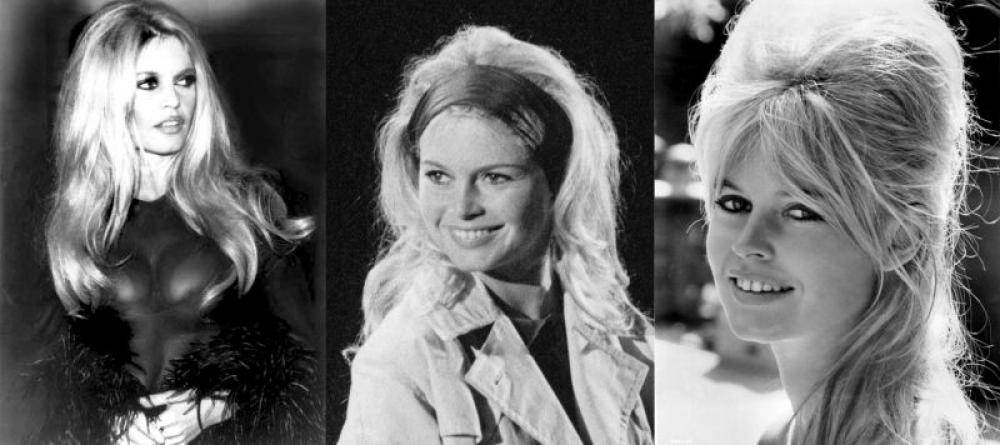
Brigitte Bardot died at 91. Photo: Wikimedia Commons
Brigitte Bardot, the French film legend whose image defined a generation and whose later life was devoted to animal rights, has died at age 91, her foundation announced on Sunday.
Announcing her death and recalling 'BB',as the actress was popularly called in her home country, her foundation said in a statement, "The Brigitte Bardot Foundation announces with immense sadness the passing of its Founder and President, Madame Brigitte Bardot, a world-renowned actress and singer, who chose to abandon her prestigious career to dedicate her life and energy to the defense of animals and her Foundation."
Bardot was a global cultural icon, rising to fame in the 1950s and 1960s with films like Et Dieu… créa la femme (And God Created Woman) that helped usher in a new era of cinematic freedom and the sexual revolution. Over her career she appeared in around fifty films and became one of the most recognizable faces in international cinema.
Ses films, sa voix, sa gloire éblouissante, ses initiales, ses chagrins, sa passion généreuse pour les animaux, son visage devenu Marianne, Brigitte Bardot incarnait une vie de liberté. Existence française, éclat universel. Elle nous touchait. Nous pleurons une légende du siècle.
— Emmanuel Macron (@EmmanuelMacron) December 28, 2025
Reacting to her demise, French President Emmanuel Macron said the French movie icon embodied a life of freedom.
In his X post, the President wrote: "Her films, her voice, her dazzling fame, her initials, her sorrows, her generous passion for animals, her face that became the embodiment of Marianne—Brigitte Bardot embodied a life of freedom. A French existence, a universal radiance. She touched us all. We mourn a legend of the century."
Bardot's later years were marked by an intense dedication to animal welfare—she founded the Brigitte Bardot Foundation in 1986 and became a vocal campaigner against cruelty to animals worldwide.
At the same time, Bardot remained a polarising figure in France due to outspoken political views that drew controversy and legal sanctions.
French media reported that Bardot had been hospitalised earlier in the year, and her health had been fragile in recent months, but details surrounding the cause and timing of her death have not been fully disclosed by her foundation.
Mourning her death, Rassemblement National party chief Jordan Bardella wrote on X: "The French people have lost today the Marianne they loved so much, whose beauty captivated the world."
Le peuple français perd aujourd’hui la Marianne qu’il a tant aimée et dont la beauté a stupéfié le monde.
— Jordan Bardella (@J_Bardella) December 28, 2025
Brigitte Bardot fut une femme de cœur, de conviction et de caractère.
Ardente patriote, amoureuse des animaux qu’elle a protégés toute sa vie, elle incarna à elle seule… pic.twitter.com/I2OlTsuVxy
"Brigitte Bardot was a woman of heart, conviction, and character. A fervent patriot, a lover of animals whom she protected throughout her life, she embodied an entire French era, but also, and above all, a certain ideal of courage and freedom," he said.
Buon viaggio Brigitte!
— Matteo Salvini (@matteosalvinimi) December 28, 2025
Stella senza tempo, ma soprattutto donna libera, anticonformista, protagonista di battaglie coraggiose in difesa delle nostre tradizioni.
Una preghiera ?? pic.twitter.com/f2IMHnsfiI
Italian Deputy Prime Minister Matteo Salvini joined her fans across the globe in condoling the death of the actress. He wrote on X, "Have a good trip, Brigitte!A timeless star, but above all a free woman, a non-conformist, a protagonist of courageous battles in defense of our traditions. A prayer."
One of the major highlights in the acting career of Bardot was her performance in And God Created Woman (Et Dieu… créa la femme, 1956).
The movie transformed Brigitte Bardot from a little-known French actress into an international sensation and permanently altered cinema’s portrayal of female sexuality. Set against the sunlit backdrop of Saint-Tropez, the film arrived as a cultural shock in the conservative post-war era, announcing the arrival of a new kind of screen heroine.
Bardot played Juliette Hardy, a free-spirited and emotionally volatile young woman who resists social norms and refuses to conform to expectations of modesty, obedience or marital restraint. Desired by several men, Juliette is unapologetically sensual, driven by desire rather than duty, and — most provocatively for the 1950s — neither punished nor redeemed within a conventional moral framework.
This ambiguity unsettled audiences and challenged deeply rooted ideas of womanhood on screen.
Directed by Roger Vadim, the film was revolutionary for its time, with erotic undertones deemed scandalous, a raw and naturalistic depiction of female desire, and a liberated, sun-drenched aesthetic far removed from studio-bound cinema. In the United States, it faced censorship battles, but the controversy only amplified its appeal, turning the film — and Bardot — into global phenomena.